
Infant Torticollis Support in Temecula
Gentle care that supports comfortable, adaptable movement, alongside your pediatric and physical-therapy team.
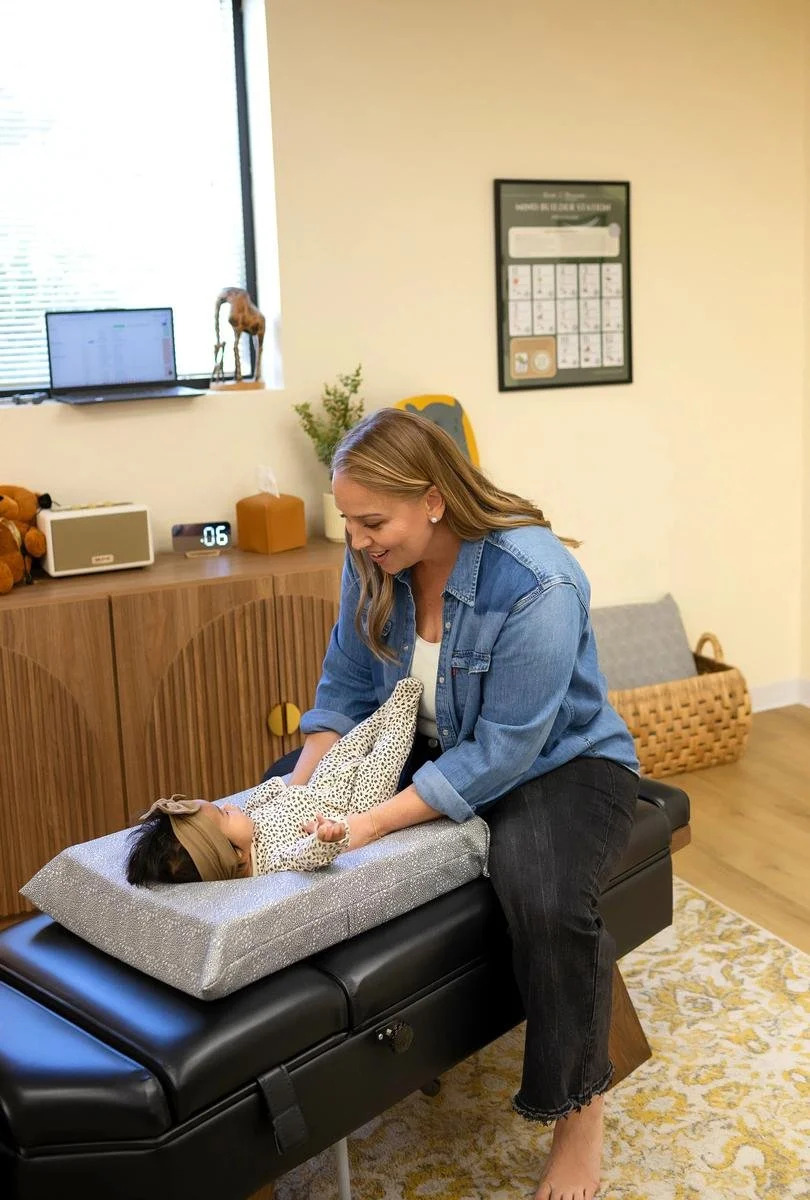
What Is Torticollis?
Torticollis is a condition where a baby's head tilts to one side and rotates toward the other, caused by tightness or shortening of the sternocleidomastoid (SCM) muscle in the neck. It can be present at birth (congenital) or develop in the early weeks of life (acquired).
You might notice your baby consistently looking one direction, resisting turning their head the other way, preferring one breast during feeding, or developing a flat spot on one side of their head.
Torticollis is one of the most common musculoskeletal conditions in infants — and one of the most responsive to early intervention.
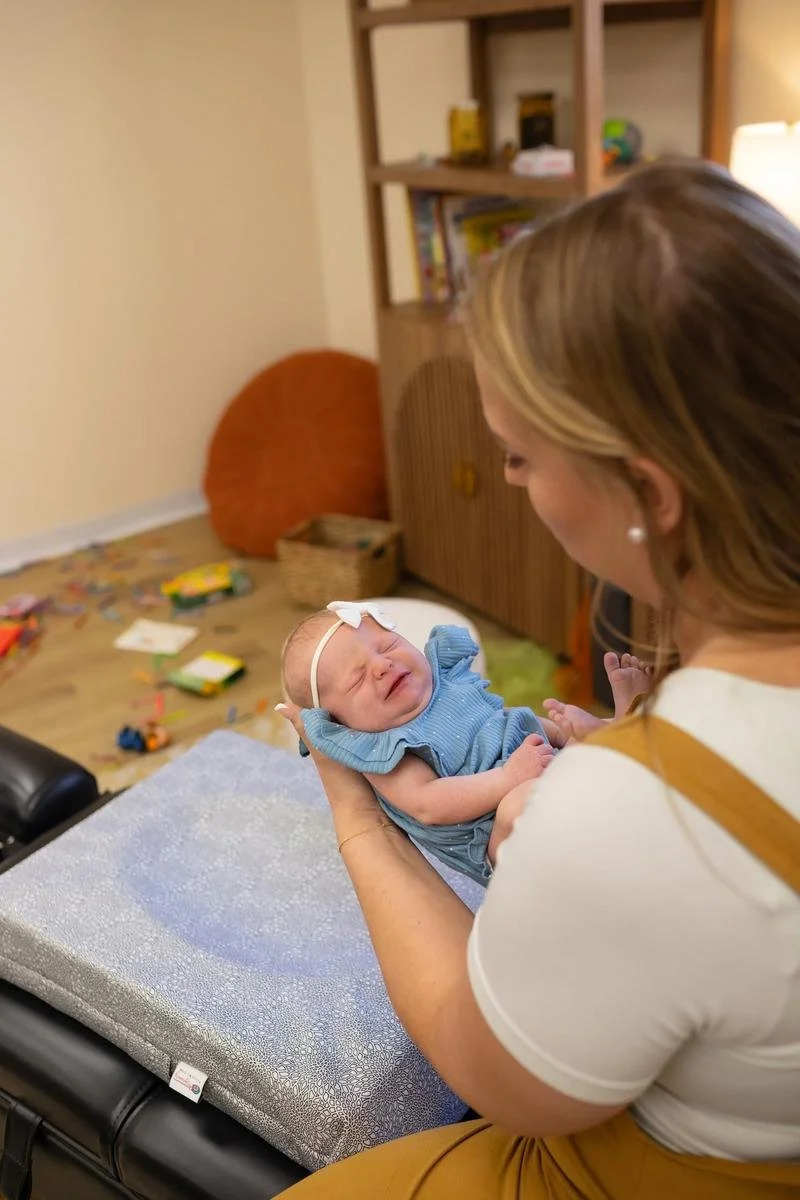
Causes and Signs Parents Notice
Torticollis often develops from:
- Intrauterine positioning (crowding, breech, or prolonged time in one position)
- A difficult delivery (especially assisted deliveries with vacuum or forceps)
Common signs include:
- A persistent head tilt to one side
- Limited range of motion when turning the neck
- Preference for feeding on one side
- Fussiness when placed in certain positions
- A developing flat spot (plagiocephaly) on the side they favor.
How Chiropractic Supports Adaptable Movement
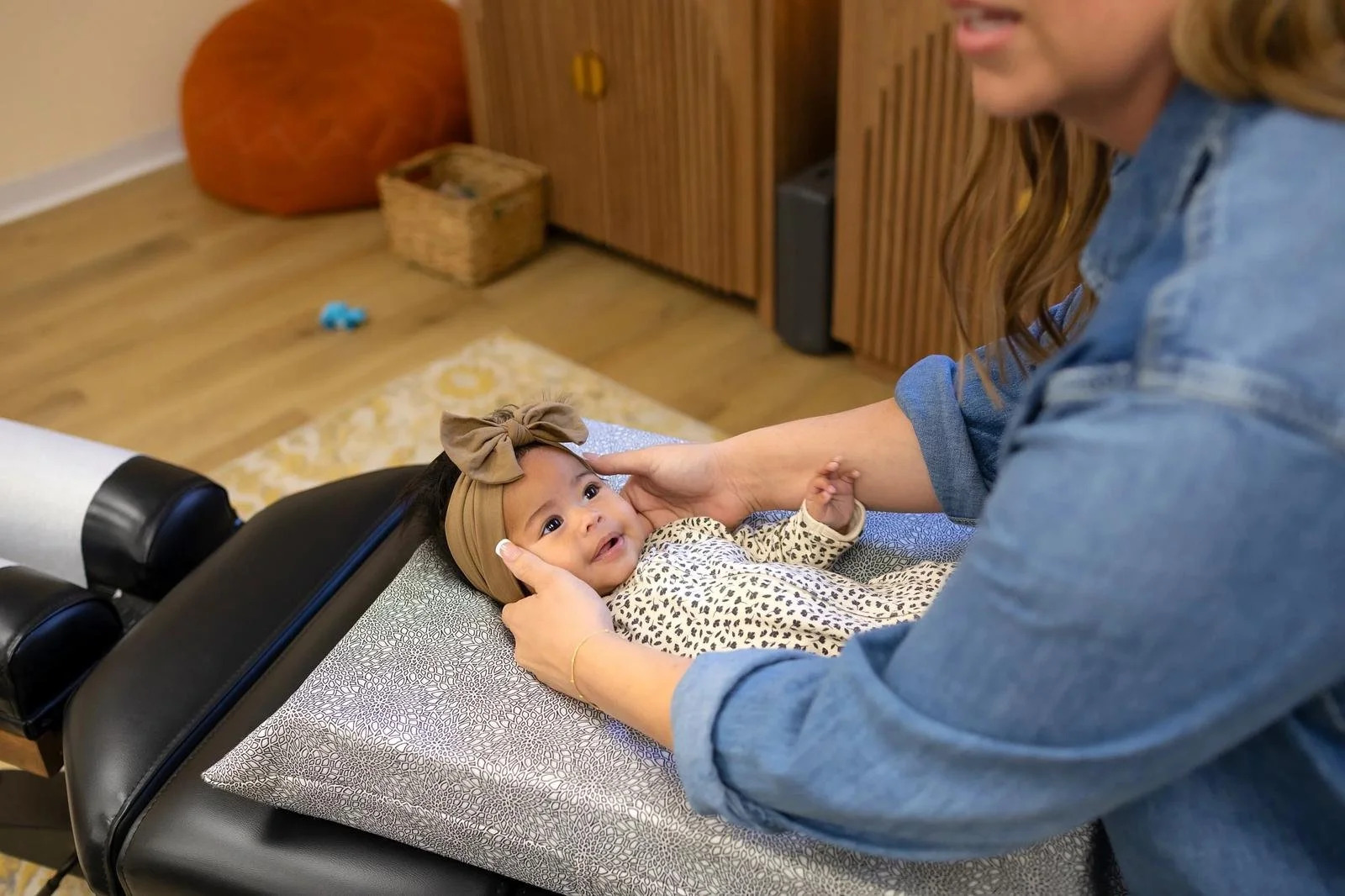
A baby's movement involves ongoing communication among the brain, spine, muscles, and sensory systems. Gentle chiropractic care looks at movement and adaptability without diagnosing or treating torticollis.
Dr. Jennifer uses gentle cervical and cranial input intended to support brain-body communication, physical comfort, and nervous-system regulation. Changes in muscle tone or range of motion cannot be guaranteed.
Pediatric and physical-therapy assessment remain important. Learn how the same supportive philosophy applies around tongue-tie care.
Coordinated Early Assessment Matters
If you notice persistent head tilt, limited rotation, feeding difficulty, or a developing flat spot, ask your pediatric clinician for an assessment. They may recommend physical therapy or other condition-specific care.
Chiropractic may be one supportive part of a coordinated plan by providing gentle sensory input, but it does not prevent plagiocephaly or guarantee neck mobility or motor-development outcomes.
Frequently Asked Questions
Can a chiropractor help with infant torticollis?
Chiropractic does not diagnose or treat torticollis. Gentle care may support comfort, brain-body communication, and adaptable movement alongside pediatric and physical-therapy care.
How early should a baby with torticollis be seen?
Seek pediatric assessment as soon as you notice persistent head tilt or limited movement. Early condition-specific guidance may include physical therapy; chiropractic does not prevent plagiocephaly, feeding issues, or motor delays.
What causes torticollis in newborns?
Infant torticollis is most often linked to positioning in the womb or a difficult delivery, which can leave the SCM muscle in the neck tight or shortened. Your pediatric clinician or physical therapist can evaluate your baby's specific situation.
How gentle is the adjustment?
Extremely gentle. Infant cervical adjustments use sustained fingertip contact — not the manual adjustments associated with adult care. Most babies tolerate it very well.